
How to Build Generational Wealth With a Whole Life Policy


COMPLIANCE NOTE: For educational purposes only. Not financial, tax, or legal advice.
A properly structured whole life insurance policy may serve as one of the most durable tools for transferring wealth across generations, combining lifelong coverage with a tax-advantaged cash value component that grows over time. For affluent families with estate tax exposure, the death benefit alone can deliver a predictable, income-tax-free transfer of assets to heirs, bypassing the delays and costs of probate. The strategy is not a shortcut. It works best when the policy is designed with intention, integrated into a broader estate plan, and maintained with the patience that long-term financial planning demands.
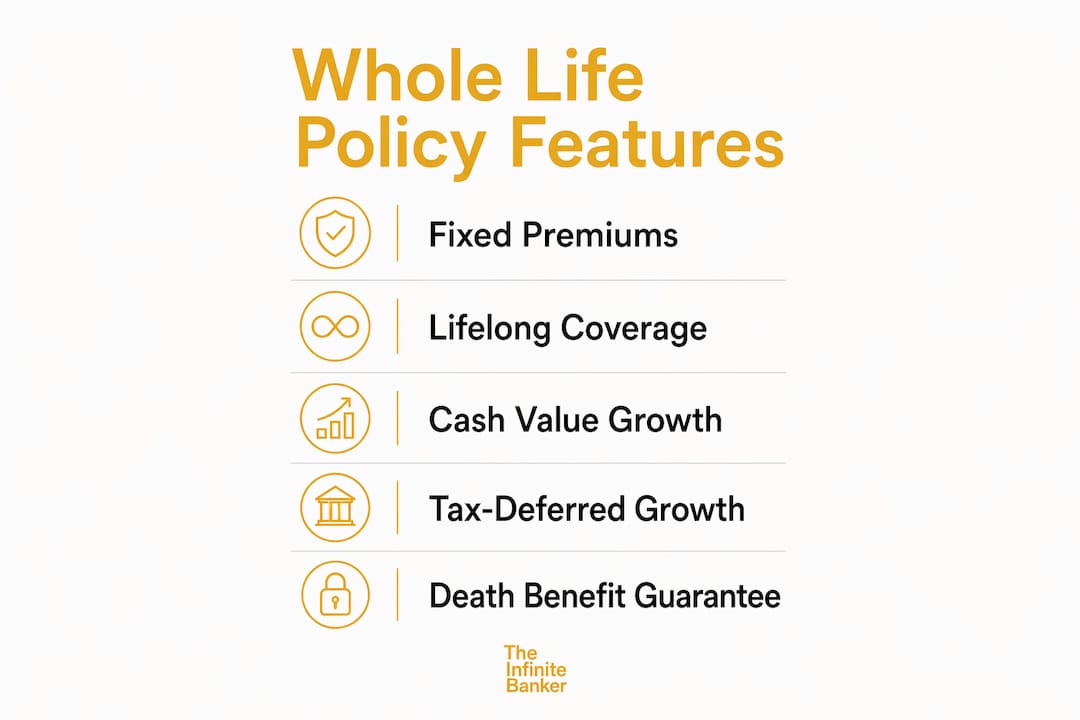
Here is what makes whole life insurance worth understanding for generational wealth purposes:
Permanent coverage: The death benefit remains in force for the insured’s lifetime, as long as premiums are paid.
Fixed premiums: Premiums are set at policy issue and do not increase with age or health changes, according to the New York Department of Financial Services.
Tax-deferred cash value growth: A portion of each premium builds cash value that grows without annual income tax liability.
Income-tax-free death benefit: Beneficiaries generally receive the death benefit free of income tax.
Probate avoidance: Proceeds pass directly to named beneficiaries, outside the probate process.
Policy loan access: Policyholders may borrow against cash value, though loans accrue interest and reduce both cash value and the death benefit if left unpaid.
Estate planning integration: Policies can be held inside trust structures, such as an Irrevocable Life Insurance Trust, to further reduce estate tax exposure.
This article covers how these features work in practice, what strategies high-income earners use to structure them effectively, and where the real risks lie.
How whole life insurance functions as a generational wealth tool
Whole life insurance provides lifelong coverage with fixed premiums and a cash value component that grows on a tax-deferred basis, typically accumulating more slowly in the early years of the policy. That structure is what separates it from term life insurance, which expires after a set period and builds no cash value at all.
Every premium payment serves two purposes. Part of it covers the cost of insurance. The remainder flows into the policy’s cash value account, where it compounds over time without triggering annual income taxes. Over a long enough horizon, that compounding can produce a meaningful pool of accessible capital, though the timeline is measured in decades, not years.
Participating whole life policies, issued by mutual insurance companies, may also pay dividends. Dividends are not guaranteed and depend on the insurer’s financial performance, so they should never be treated as a fixed return. When dividends are paid, policyholders can take them as cash, use them to reduce premiums, or reinvest them to increase the death benefit and accelerate cash value growth. The dividend potential on participating policies adds a variable upside, but the policy’s core value rests on its guaranteed components.
Key components and how they interact:
Death benefit: The face amount paid to beneficiaries upon the insured’s death; can be structured for legacy maximization or balanced with cash value access.
Cash value: Accumulates tax-deferred; accessible via policy loans or surrenders, though surrenders may trigger taxes on gains.
Premiums: Fixed for life; higher than term insurance but fund both coverage and cash value accumulation.
Dividends: Possible on participating policies; not guaranteed and vary by insurer performance.
Policy loans: Borrowed against cash value; accrue interest and reduce the death benefit if unpaid; policies can lapse if loans exceed cash value.
For a deeper look at how participating policies handle dividends, participating whole life insurance explains the mechanics in detail.
Primary benefits of whole life insurance for wealth transfer
The core appeal for high-net-worth families is leverage. A policyholder who pays premiums over many years may leave a death benefit that substantially exceeds the total premiums paid, particularly when the insured is young and healthy at policy issue. That ratio is most favorable early in life, which is why families who use whole life for legacy planning tend to start policies as early as possible.

Beyond leverage, the guaranteed death benefit provides certainty that term insurance cannot. Whole life premiums are higher, but the coverage never expires, making it suitable for estate and legacy planning where the timing of death is, by definition, unknown. A term policy that expires before the insured dies leaves nothing for heirs.
Probate avoidance is another concrete advantage. Life insurance proceeds pass directly to named beneficiaries outside the estate settlement process, which means heirs receive funds faster and without the legal costs that probate can impose. For families with complex estates, that speed and simplicity can matter considerably.
Creditor protection varies by state, but many states offer meaningful protection for life insurance cash value and death benefits from the claims of creditors. This makes whole life a useful component of an asset protection strategy for business owners and real estate investors who carry personal liability exposure.
Pro Tip: Name contingent beneficiaries on every policy. A primary beneficiary who predeceases the insured can send proceeds into probate if no contingent is named, defeating one of the policy’s key advantages.
Key benefits at a glance:
Legacy leverage: Death benefit may exceed total premiums paid, particularly for younger insureds.
Permanent coverage: No expiration date, unlike term insurance.
Probate bypass: Proceeds go directly to beneficiaries, avoiding estate settlement delays.
Creditor protection: Varies by state; may shield cash value and death benefit from certain creditor claims.
Predictable transfer: Beneficiaries receive a defined amount, regardless of market conditions.
Key strategies for transferring wealth with a whole life policy
Prioritizing death benefit for legacy
When the primary goal is leaving the largest possible inheritance, policy design should lean toward maximizing the death benefit rather than early cash value liquidity. These two levers work inversely: maximizing death benefit often reduces early-stage cash value access. Families who understand this trade-off from the start can structure the policy accordingly, rather than being surprised when early surrender values are low.
Using cash value loans within the family
One of the more sophisticated uses of whole life insurance in generational wealth planning involves lending cash value to children or grandchildren for major purchases, business ventures, or real estate. The loan stays within the family, and the interest paid returns to the policy rather than to a bank. However, misclassifying these loans as gifts can trigger IRS tax consequences. Formal written agreements, documented interest rates, and enforced repayment schedules are not optional. The IRS can reclassify an undocumented loan as a taxable transfer, collapsing the tax-advantaged structure the policy was built to support. Loans also accrue interest and reduce both cash value and the death benefit if unpaid.

Irrevocable Life Insurance Trusts
An Irrevocable Life Insurance Trust, commonly called an ILIT, holds the policy outside the insured’s taxable estate. When structured correctly, an ILIT removes death benefit proceeds from the taxable estate entirely, which can be significant for families whose estates exceed the federal estate tax exemption. The trust owns the policy, pays the premiums, and distributes proceeds to beneficiaries according to the trust’s terms. This structure requires an estate attorney to draft and administer properly.
Insuring younger family members
Premiums are priced on the insured’s age and health at policy issue. Insuring younger, healthier family members secures better mortality rates and locks in lower premium costs for the life of the policy. A grandparent funding a policy on a grandchild, for example, can create a long-duration asset at a fraction of the cost of insuring an older individual.
Strategic approaches summarized:
Death benefit focus: Design for legacy maximization when cash access is secondary.
Family loans: Require written agreements, stated interest rates, and enforced repayment to avoid IRS reclassification.
ILIT structure: Removes proceeds from taxable estate; requires estate attorney involvement.
Insure younger members: Lower premiums and longer compounding horizon improve cost efficiency.
Coordinate with estate plan: Policy strategy should follow the estate plan, not precede it.
Tax considerations and probate avoidance
Death benefits from whole life insurance are generally paid income-tax-free to designated beneficiaries. That is one of the most cited advantages of using life insurance in estate planning, and it holds in most circumstances as long as the policy is structured correctly and the insured is not also the policy owner in a way that pulls proceeds back into the taxable estate.
Cash value grows on a tax-deferred basis. Policyholders do not owe income tax on the internal growth each year, which allows compounding to work without annual tax drag. If the policy is surrendered, however, any gains above the cost basis become taxable income. Policy loans, by contrast, are not treated as taxable income as long as the policy remains in force, which is one reason loans are generally preferred over surrenders for accessing cash value.
Estate tax is a separate consideration. The federal estate tax exemption is set at a high threshold, but it is scheduled to change, and affluent families with large estates need to plan around the possibility of reduced exemptions. Holding a policy inside an ILIT removes the death benefit from the taxable estate, which can be a meaningful planning tool for families near or above the exemption threshold. An estate attorney should be involved in any ILIT structure.
Probate avoidance is straightforward: life insurance proceeds with a named living beneficiary pass outside the probate process entirely. That means faster distribution, lower legal costs, and privacy, since probate records are public in most states.
Tax and probate factors to keep in mind:
Income tax on death benefit: Generally none for named beneficiaries, provided the policy is structured correctly.
Cash value tax deferral: No annual income tax on internal growth; gains taxable only upon surrender.
Policy loans: Not taxable income while the policy is in force; loans accrue interest and reduce death benefit if unpaid.
Estate tax: ILIT structure can remove proceeds from taxable estate for families with estate tax exposure.
Probate bypass: Named beneficiaries receive proceeds directly, outside estate settlement.
Documentation: All family loans must be formally documented to preserve tax-advantaged treatment.
For a detailed breakdown of how cash value grows tax-deferred, the mechanics are worth reviewing before structuring any policy.
Is whole life insurance the right tool for your family’s legacy?
Whole life insurance is generally most appropriate for high-net-worth individuals with genuine estate tax exposure, not as a starting point for most families beginning to think about estate planning. That distinction matters. The strategy works when it fits inside a well-designed estate plan, not when it is the plan itself.
Several carriers have long track records in this space. Mutual of Omaha, New York Life, and Fidelity Life each offer whole life products, though the right carrier for any individual depends on underwriting, dividend history, financial strength ratings, and policy design flexibility. Policy design, meaning how the premium is allocated between base coverage and paid-up additions, has a larger effect on long-term outcomes than carrier selection alone.
The comparison between whole life and term insurance comes down to purpose. Term insurance is cost-efficient for income replacement during working years. Whole life is designed for permanent coverage, cash value accumulation, and estate planning. For entrepreneurs and real estate investors who have already funded tax-advantaged retirement accounts and are looking at estate tax exposure, whole life can serve a function that term insurance structurally cannot. The comparison between whole life and term for entrepreneurs covers this trade-off in practical terms.
Expert insights and best practices for using whole life insurance effectively
Authorized IBC Practitioners consistently frame whole life insurance as a structural tool, not an investment vehicle. The distinction is meaningful. An investment vehicle is evaluated primarily on return. A structural tool is evaluated on what it enables: liquidity, leverage, tax positioning, and estate transfer. Conflating the two leads to disappointment, because whole life’s internal rate of return in the early years is poor by any investment standard.
The early years of a whole life policy present what practitioners call the funding lag. Policyholders often start upside down, meaning the total premiums paid exceed the policy’s cash value for a period that can stretch several years. Capital is effectively restricted during this window. Families who need liquidity in the near term should not count on early cash value as a resource. The policy’s value compounds over time, and the math improves significantly in later years, but patience is not optional.
Policy design decisions made at issue are difficult to reverse. The allocation between base death benefit and paid-up additions, the use of term riders to blend coverage, and the premium funding level all shape how the policy performs over decades. Working with an advisor who understands policy design, not just product sales, is the difference between a policy that serves its purpose and one that underperforms.
Pro Tip: Before funding a whole life policy for legacy purposes, work with an estate attorney to determine whether a revocable trust, irrevocable trust, or ILIT structure best fits your goals. The product should follow the plan, not precede it.
Expert best practices:
Treat it as a structural tool: Evaluate whole life on liquidity, leverage, and estate positioning, not investment returns.
Plan for the funding lag: Early cash value will be lower than premiums paid; this is normal and expected.
Prioritize policy design: Allocation between death benefit and paid-up additions shapes long-term performance.
Acknowledge dividend uncertainty: Dividends on participating policies are not guaranteed and should not be projected as fixed income.
Document all loans formally: Written terms, interest rates, and repayment schedules protect the tax-advantaged structure.
Coordinate with legal and financial advisors: Estate attorneys, fee-only financial advisors, and IBC Practitioners should work together on any legacy-focused policy strategy.
Check premium affordability: A policy that lapses due to missed premiums can trigger taxes and eliminate the death benefit entirely.
For families integrating whole life into a real estate portfolio or broader investment strategy, whole life in a real estate portfolio covers trust integration and estate planning alignment in that context. If you are working with an estate planning attorney on the trust side, will writing and estate planning services can help coordinate the legal structure around your policy.
Key Takeaways
A whole life insurance policy may support generational wealth transfer when it is properly designed, integrated into a broader estate plan, and maintained with a long-term perspective suited to affluent families with estate tax exposure.
Point | Details |
Permanent coverage with fixed premiums | Whole life provides lifelong coverage at a set premium, unlike term insurance, which expires. |
Tax-deferred cash value growth | Cash value accumulates without annual income tax liability, though gains are taxable upon surrender. |
Income-tax-free death benefit | Beneficiaries generally receive the death benefit free of income tax when the policy is structured correctly. |
ILIT removes proceeds from taxable estate | An Irrevocable Life Insurance Trust can remove death benefit proceeds from the taxable estate for estate tax planning. |
The Infinite Banker’s approach | The Infinite Banker helps high-income earners implement properly structured whole life strategies focused on capital efficiency and long-term flexibility. |
Why the conventional wisdom on whole life insurance misses the point
Most articles about whole life insurance for generational wealth fall into one of two traps. Either they oversell the strategy as a near-magical tax shelter, or they dismiss it entirely as an overpriced product pushed by commission-hungry agents. Neither framing is useful for someone who is actually trying to make a sound decision.
The real question is not whether whole life insurance is good or bad. The question is whether it fits your specific situation, your estate tax exposure, your liquidity needs, your time horizon, and your willingness to hold a policy for decades without touching it. For a high-income earner who has already funded retirement accounts, has genuine estate tax exposure, and is working with an estate attorney on a trust structure, a properly designed whole life policy can be a sensible component of a legacy plan. For someone who needs liquidity in the next five years or is looking for investment-grade returns, it is the wrong tool entirely.
What gets underestimated is the importance of policy design. Two whole life policies from the same carrier, funded with the same premium, can perform very differently over 20 years depending on how the premium is allocated between base coverage and paid-up additions. Most people buying these policies never see that level of detail. They see a death benefit number and a projected cash value illustration, and they sign. The illustration is not a contract. Dividends are not guaranteed. The early years will look worse than the illustration suggests. That is not a scandal. It is just how the product works, and understanding it in advance is what separates a well-structured policy from a regretted one.
The Infinite Banker’s approach, grounded in Infinite Banking concepts developed by Nelson Nash, treats the policy as a personal banking system rather than an investment. That framing shifts the evaluation criteria entirely. You are not asking whether the policy beats the S&P 500. You are asking whether it provides reliable, accessible capital, a tax-advantaged death benefit, and a structure that supports long-term wealth transfer. On those terms, a properly designed whole life policy can deliver. On investment terms, it rarely will.
The Infinite Banker’s approach to whole life insurance for legacy planning
For high-income earners and entrepreneurs who want to use whole life insurance as part of a legacy strategy, the structure of the policy matters more than the carrier name on the cover page.

The Infinite Banker works with entrepreneurs, real estate investors, and high-income earners to implement properly structured whole life insurance strategies focused on capital efficiency and long-term flexibility. The approach draws on Infinite Banking concepts to help clients think about their policy as a personal banking system, not a passive savings product. That means designing policies with the right allocation between death benefit and paid-up additions, coordinating with estate attorneys on trust structures, and setting realistic expectations about the funding lag in early years.
If you want to understand how a properly designed policy might fit your estate plan, the Infinite Banking calculator is a useful starting point for modeling the numbers. For a broader introduction to the strategy, how Infinite Banking works covers the foundational concepts. And if you are ready to talk through your specific situation with an Authorized IBC Practitioner, The Infinite Banker offers personalized consultations tailored to your goals.
This post is educational only and not financial, tax, or legal advice. Consult qualified professionals before acting.
Recommended
Comments