
Financial Independence Strategies Checklist for 2026


COMPLIANCE NOTE: For educational purposes only. Not financial, tax, or legal advice.
A financial independence strategies checklist is a structured set of steps that aligns your income, expenses, and investments to sustain your chosen lifestyle without depending on active employment. The checklist covers five core areas: emergency savings, debt management, tax-advantaged accounts, investment allocation, and ongoing plan review. Each area builds on the last, creating a personal finance roadmap that moves from financial fragility to financial self-sufficiency. The 25x rule, which states you need 25 times your annual expenses saved to retire, and the standard 3–6 month emergency fund benchmark are two widely recognized anchors for this planning process.
1. Financial independence strategies checklist: build your foundation first
Financial independence starts with a stable base, not with investment picks. Without a foundation, any wealth-building effort is vulnerable to a single unexpected expense.
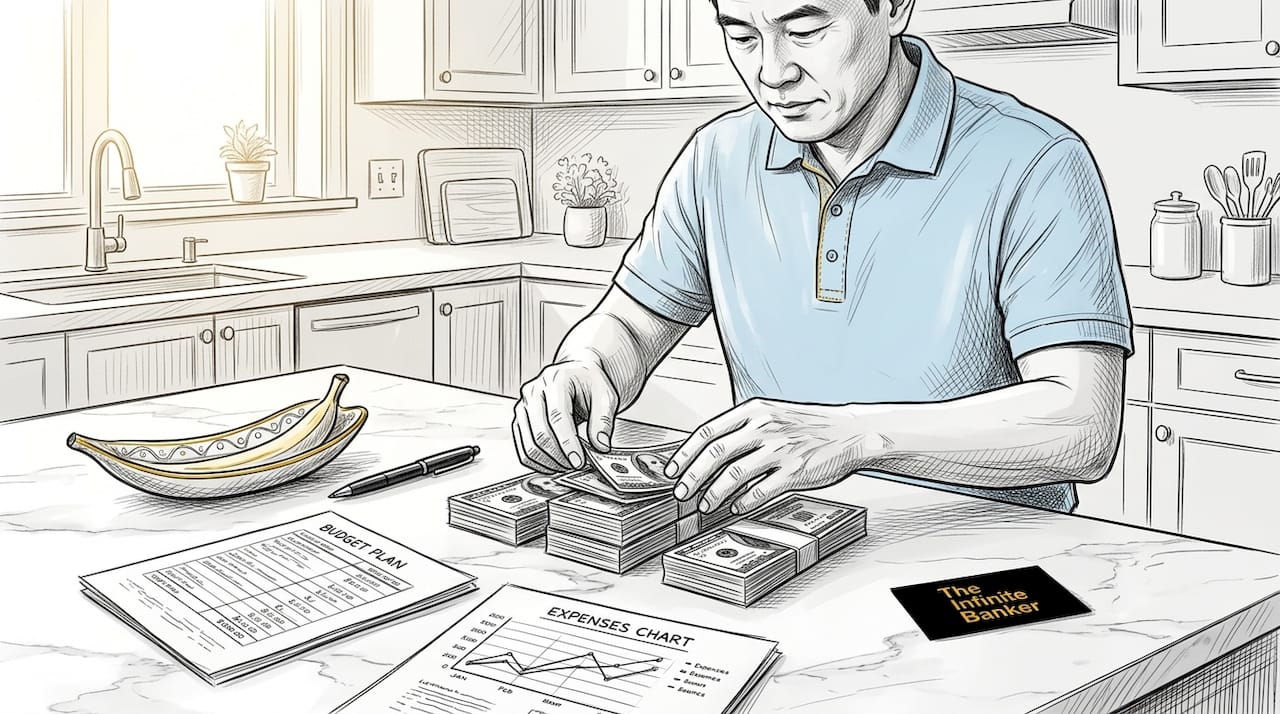
The first step is a tactical $1,000 cash buffer. This initial emergency buffer stops the debt cycle from restarting every time a small crisis hits. It is not a full emergency fund. It is a circuit breaker.
Once that buffer is in place, redirect your energy toward high-interest debt. Credit card balances carrying rates above 15% destroy compounding faster than almost any investment can rebuild it. Pay those down aggressively before moving to the next step.
Pro Tip: Automate a fixed transfer to your emergency buffer account on payday. Treat it like a non-negotiable bill, not a discretionary choice.
2. Build a full emergency fund in a high-yield savings account
A complete emergency fund covers 3–6 months of essential expenses held in a high-yield savings account. Essential expenses mean housing, food, utilities, insurance, and minimum debt payments. Discretionary spending does not count.
The high-yield savings account matters. A standard savings account earning near 0% erodes your purchasing power. High-yield accounts, widely available through online banks, typically offer meaningfully higher rates and keep your funds liquid.
Six months is the right target for anyone self-employed, in a commission-based role, or with variable income. Three months may suffice for those with stable salaried employment and a second household income. Choose your target based on your actual income stability, not on what feels comfortable.
3. Prioritize debt payoff by interest rate
Debt payoff strategy follows a clear logic: eliminate the highest-cost debt first. This is the avalanche method, and it minimizes total interest paid over time.
List every debt with its balance, interest rate, and minimum payment. Pay minimums on all accounts. Direct every extra dollar toward the highest-rate balance. Once that balance reaches zero, roll its payment into the next highest-rate debt.
The avalanche method is mathematically superior to the snowball method (paying smallest balances first) for most borrowers. The snowball method offers a psychological win from quick payoffs, which can help some people stay motivated. Choose the approach you will actually follow through on.
4. Sequence your tax-advantaged contributions correctly
The optimal contribution sequence for 2026 follows four steps: contribute to your 401(k) up to the employer match, then maximize your Roth IRA up to the $7,500 limit, then finish your 401(k) contributions, then move to taxable accounts. Skipping step one means leaving free money on the table. Skipping step two means paying taxes on growth you could have avoided.
Health Savings Accounts (HSAs) belong in this sequence for anyone with a qualifying high-deductible health plan. HSAs carry a triple tax advantage: contributions reduce taxable income, growth is tax-deferred, and qualified medical withdrawals are not taxed. That combination makes the HSA one of the most efficient vehicles in a wealth-building checklist.
Pro Tip: If your employer offers a Roth 401(k) option, compare your current tax bracket against your expected retirement bracket. Roth contributions make more sense when you expect to be in a higher bracket later.
Common mistakes in account sequencing include funding a taxable brokerage account before maxing the Roth IRA, and ignoring the HSA entirely because it feels like a healthcare account rather than an investment vehicle.
5. Choose investments aligned with your independence timeline
Low-cost total stock market index funds and international index funds form the core of most financial independence portfolios. They offer broad diversification, minimal fees, and historically consistent long-term returns. High expense ratios compound against you the same way returns compound for you.
Asset allocation should shift as you approach your financial independence date. A portfolio weighted heavily toward equities makes sense 15 or more years out. As you close within five years of your target date, gradually increasing bond allocation reduces sequence-of-returns risk. Sequence-of-returns risk is the danger that a market downturn in your first years of withdrawal permanently damages your portfolio.
For early retirees, a 3.0–3.5% withdrawal rate is more appropriate than the traditional 4% rule. A longer retirement horizon means more years of potential market volatility. The lower rate provides a wider safety margin.
Passive income streams reduce the total portfolio size you need to reach independence. Rental income, royalties, or dividend income from a taxable account all reduce withdrawal pressure. Each dollar of reliable passive income is roughly $25–$33 less you need in your portfolio under a 3–4% withdrawal framework.
6. Understand how savings rate drives your timeline
Savings rate is the single most powerful variable in your independence timeline. Increasing your savings rate from 20% to 40% can cut approximately 12 years off your path to financial independence. Portfolio returns matter, but they are largely outside your control. Your savings rate is not.
Tracking your savings rate monthly keeps this lever visible. Divide your total savings and investments by your gross income. A rate below 20% means a very long timeline. A rate above 40% compresses it significantly.
Spending reductions and income increases both move the rate. Income increases are faster, but spending reductions are permanent. A $500 monthly expense cut saves $500 every month indefinitely. A $500 monthly income increase requires continued effort to maintain.
7. Plan for tax-efficient withdrawals before you need them
Tax-efficient withdrawal sequencing requires balancing three account types: taxable, tax-deferred (traditional 401(k) and IRA), and tax-free (Roth). Drawing from the wrong account at the wrong time can push you into a higher bracket unnecessarily.
The general sequence is to spend taxable accounts first, then tax-deferred accounts, then Roth accounts last. This preserves Roth growth longest and delays required minimum distributions. However, Roth conversions in low-income years before Social Security or RMDs begin can reduce lifetime tax burden significantly.
Stress-testing your income sources before reaching financial independence is not optional. Evaluate whether your income streams hold up in a recession, a prolonged bear market, or a personal health event. Healthcare costs deserve particular attention for anyone planning to retire before Medicare eligibility at age 65.
8. Schedule annual plan reviews and adapt to life changes
Financial independence planning requires regular revision. A plan built at age 30 will not reflect the realities of your life at 40. Major life events, including marriage, divorce, children, job changes, and health shifts, all require a plan update.
Schedule a formal annual review. Check your savings rate, your asset allocation, your emergency fund balance, and your projected FI date. Adjust each variable based on what changed in the prior year.
Pro Tip: Use your annual review to recalculate your FI number using your actual current spending, not the number you estimated years ago. Lifestyle changes in both directions affect the target.
Professional advice adds value at key decision points. A fee-only financial planner can validate your withdrawal strategy, identify tax optimization opportunities, and stress-test your plan against scenarios you may not have considered. Early professional guidance helps avoid costly sequencing mistakes that are difficult to reverse.
9. Prepare for the psychological shift from earning to spending
Transitioning from earning income to spending from assets is one of the most underestimated challenges in financial independence planning. Decades of saving create a strong psychological resistance to spending down a portfolio, even when the math supports it.
The Barista FIRE approach addresses this directly. Barista FIRE means maintaining some part-time or flexible earned income after reaching financial independence. That income supplements portfolio withdrawals, reduces sequence-of-returns risk, and eases the psychological transition. It also provides structure and social connection that full retirement sometimes removes.
Your FI number should be treated as a stress-tested range, not a fixed finish line. Build in flexibility for market downturns, unexpected expenses, and lifestyle changes. A plan that requires everything to go right is a fragile plan.
Key takeaways
A financial independence strategies checklist works because it sequences each step in the right order, from emergency savings through tax-efficient withdrawals, so that each layer reinforces the next.
Point | Details |
Emergency fund first | Build a $1,000 buffer, then grow to 3–6 months of essential expenses in a high-yield account. |
Contribution sequence matters | Follow the 401(k) match, Roth IRA ($7,500 in 2026), full 401(k), then taxable account order. |
Savings rate beats returns | Raising your savings rate from 20% to 40% may cut roughly 12 years from your FI timeline. |
Use a conservative withdrawal rate | Early retirees should target a 3.0–3.5% withdrawal rate to protect against sequence-of-returns risk. |
Review and revise annually | Recalculate your FI number each year using actual spending, and adjust after every major life event. |
What I’ve learned from watching people reach financial independence
The plans that actually work share one trait: they are built around real behavior, not ideal behavior. Most people overestimate their ability to manually save and invest consistently. Automating savings right out of payroll removes the decision entirely. That single change, more than any investment choice, separates people who reach independence from those who plan to.
The other pattern I see consistently is underestimating healthcare. Anyone targeting independence before age 65 needs a concrete plan for health insurance costs. This is not a line item to estimate loosely. A single year of marketplace premiums for a family can run well into five figures, and that cost needs to be modeled into your FI number before you stop working.
The third thing I would tell anyone building this checklist: your FI number is not a destination. It is a range. Markets move. Life changes. The people who stay financially independent are the ones who built flexibility into the plan from the start, not the ones who hit a number and stopped paying attention. Financial independence is not a one-time achievement. It is a system you maintain.
— Jib Hunt
How The Infinite Banker fits into your independence plan
The Infinite Banker works with entrepreneurs, real estate investors, and high-income earners who want more control over their capital while building toward financial self-sufficiency. The approach centers on properly structured dividend-paying whole life insurance, which is designed to create a personal banking system with liquidity and long-term flexibility. Dividends are not guaranteed and vary by insurer. Policy loans accrue interest and reduce cash value and the death benefit if unpaid. Policies can lapse if not properly funded.
For those already working through a personal finance roadmap, The Infinite Banker’s strategies may complement existing tax-advantaged accounts by adding a layer of cash flow control. Learn more about whether this approach fits your situation at The Infinite Banker.
FAQ
What is the 25x rule in financial independence?
The 25x rule states that you need 25 times your annual expenses saved to sustain your lifestyle indefinitely using a 4% withdrawal rate. It is a widely used benchmark for estimating your target portfolio size.
How much should my emergency fund cover?
A complete emergency fund covers 3–6 months of essential expenses held in a high-yield savings account. Those with variable or self-employed income should target the higher end of that range.
What is the best contribution sequence for 2026?
The recommended sequence is: 401(k) up to the employer match, then Roth IRA up to the $7,500 limit, then the full 401(k) contribution, then taxable accounts. This order captures free money first and prioritizes tax-free growth second.
What withdrawal rate is safe for early retirees?
Early retirees, meaning those retiring before age 50, should target a 3.0–3.5% withdrawal rate rather than the traditional 4% rule. The lower rate accounts for a longer retirement horizon and greater sequence-of-returns exposure.
What is Barista FIRE?
Barista FIRE is a financial independence approach where you maintain part-time or flexible earned income after reaching your FI number. That income reduces portfolio withdrawal pressure and helps manage sequence-of-returns risk during market downturns.
This post is educational only and not financial, tax, or legal advice. Consult qualified professionals before acting.
Comments